

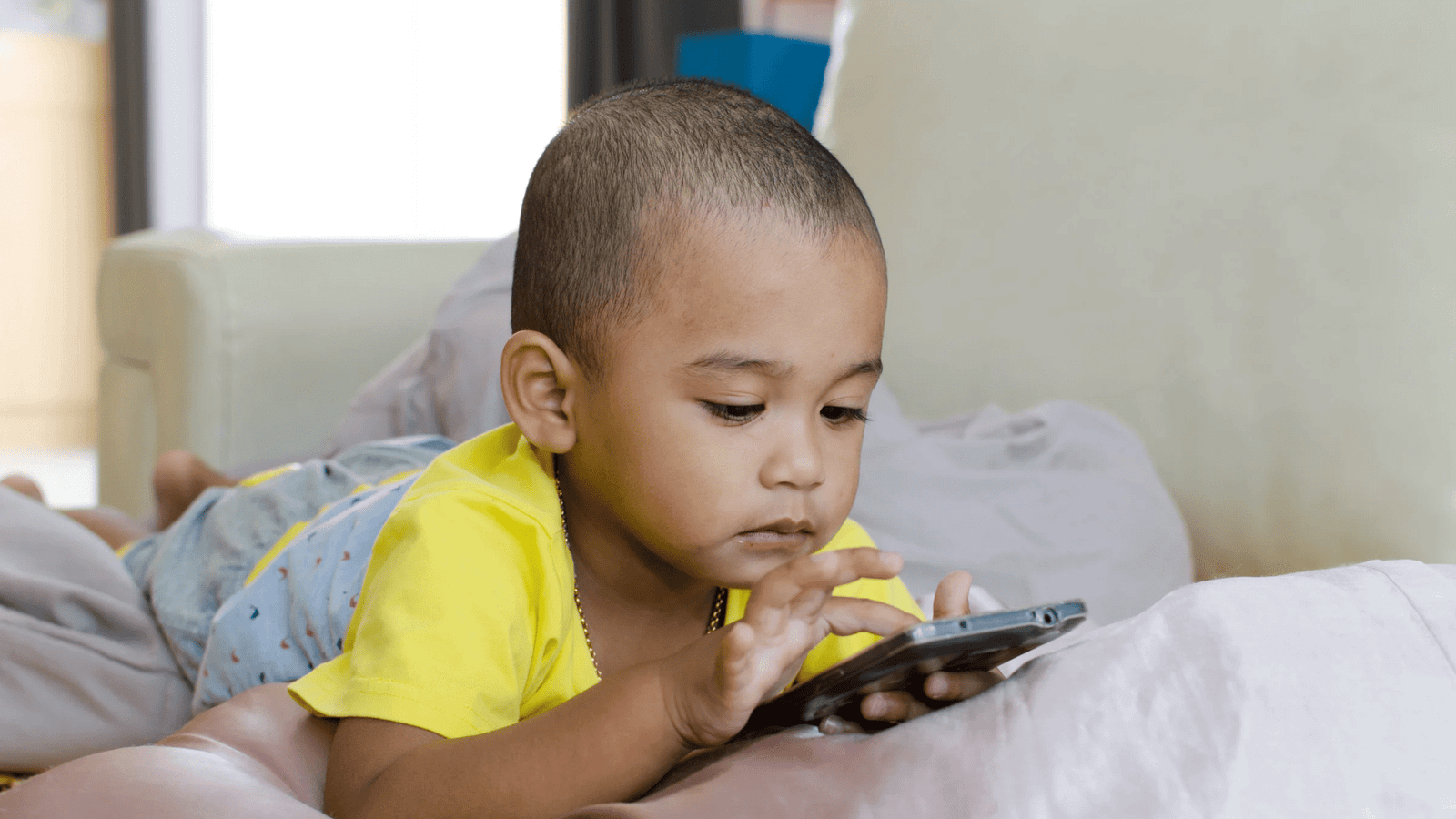
In 2019, researchers at a Delhi public hospital asked the mothers of 370 toddlers, all 15 to 18 months old, what their children watched. Almost every child, 99.7%, had been exposed to screens. Smartphones led: 96% of the toddlers had watched on one, and the median child spent 2 hours a day in front of a screen. First exposure came at a median age of 10 months, according to the paper in Indian Pediatrics.
WHO’s advice for a 1-year-old is no sedentary screen time. For a 2-year-old it is no more than 1 hour a day, and less is better.
Most of it was supervised: 74% of viewing happened with a parent present, and in 65% of families dinner came with a screen. The most common reason for handing over a device, the paper reports, was to occupy the child while the caregiver was busy or to console them. Only 2 mothers knew of any screen-time recommendation for infants.
Why the phone gets handed over
Parents are not oblivious. In a 2026 study in BMJ Open, researchers ran six focus groups in urban Chennai and rural Thiruvallur with 54 caregivers of children under 5 whose screen time already exceeded WHO limits: 46 mothers, 6 grandmothers and 2 fathers. Most knew the risks. Many still described screens as a babysitter or a pacifier.
The reasons were practical. One mother said her toddler followed her into the kitchen and hurt herself on hot plates, so she now parks the child in front of the TV while she cooks. Another said there is nowhere to play outside: the road is unsafe and neighbours complain when children touch their vehicles. A mother who works evening meetings described being the only caregiver at that hour, with no choice. Of the 54 caregivers, 44 lived in nuclear families. The authors read screen use as a response to everyday caregiving pressure, not as individual failure.
We just give the phone so they stay quiet
Title of the 2026 BMJ Open study of Tamil Nadu caregivers
Taking the phone back is its own fight. Caregivers described tantrums, a remote control broken in anger and, in one home, a phone thrown and shattered by a 5-year-old. Rules also leak: one mother said that when she took the phone away, her husband handed over his.
The adults’ own habits show up in the data too. In the Delhi study, 41% of mothers said they were not at all concerned about their own screen time.
Where the social apps come in
Here the data gets thin, and it is worth saying so. The Indian toddler studies above measure screens and video in general, not social apps. Social media shows up in the numbers when children are older, and mostly through what parents report.
A late-2022 LocalCircles poll drew over 65,000 responses from 287 districts. Urban parents were asked about children aged 9 to 13. 55% said their child has access to a smartphone for all or most of the day, outside school classes. 49% said the child spends 3 hours or more a day on social media, videos and games. 47% said their child is hooked on videos, chat and gaming, using the strongest answer on offer. Asked why their 9-to-17-year-olds were hooked, 31% pointed to children watching parents use gadgets heavily, and 28% to handing over gadgets earlier than they should have.
It is a poll of LocalCircles members, 67% of them men, so treat it as parents’ perception, not a measurement. Still, 68% of those parents want the minimum age to open a social account raised from 13 to 15.
The law points the same way. India’s DPDP Rules, notified in November 2025, require platforms to get verifiable parental consent before processing the data of anyone under 18, with exemptions for settings such as healthcare and schools. Those consent obligations take effect in May 2027, so they are not yet in force. Worth noting: the rule governs what platforms do with a child’s data. A toddler watching on a parent’s logged-in phone is, to the platform, the parent.
What caregivers tried
The Chennai caregivers shared what worked for them. Redirecting children to toys or colouring. Outdoor play. Cutting access gradually. Password locks on the phone. One father disconnected cable TV for two months and reported that his child played outside more and slept better. Others enrolled children in dance or tuition classes, though several said cost and transport put that out of reach. Consistency came up again and again: limits only hold if every adult in the house follows them.
WHO says quiet time is better spent on reading, storytelling, singing and puzzles with a caregiver, which is the idea behind the swaps in the tool below.
Limits of the evidence. The Chennai study only included caregivers whose children already exceeded WHO limits, so it cannot say what works best. The Delhi study sampled one hospital’s immunisation clinic, mostly middle-income families.
Try it: count your family’s phone moments
Pick the child’s age, then set the minutes in a typical day for each moment when the phone comes out. The tool compares your total with WHO’s limit and with averages from Indian studies, then suggests a swap for each moment. Nothing you enter leaves this page.
Phone-moment counter
Count time spent watching or playing, not video calls with family. Waking hours assume the midpoint of WHO’s sleep range for the age.
Read this. The tool is a counting aid, not a diagnosis. WHO’s limits cover sedentary screen time, and the Indian averages come from small regional studies, so treat them as reference points, not targets. Swaps are suggestions drawn from what Chennai caregivers tried and from WHO’s list of quiet activities. If you have concerns about your child’s development, talk to your paediatrician.
Questions parents ask
How much screen time is safe for a toddler?
WHO recommends no sedentary screen time for children under 2. For ages 2 to 4, the limit is 1 hour a day, and less is better. For quiet time, WHO encourages reading, storytelling, singing and puzzles with a caregiver. These limits apply to watching and playing, such as videos and games.
Why do Indian parents give phones to toddlers?
Mostly to keep a child occupied or calm while an adult is busy. In a Delhi study of 370 toddlers, that was the most common reason given. A Tamil Nadu study of 54 caregivers added safety worries, no safe place to play and household chores. Researchers read it as a caregiving squeeze, not carelessness.
What do the rules say about children on social media in India?
Most platforms set a minimum age of 13, and India’s data protection rules add a second layer. From May 2027, platforms must get verifiable parental consent before processing the data of anyone under 18, with exemptions such as healthcare and schools. The rules govern platforms, so they cannot see a child using a parent’s account.
What can I do if I have no one to help?
Start with one moment, not the whole day. Caregivers in the Tamil Nadu study redirected children to toys and colouring, used outdoor play, cut access gradually and locked the phone with a password. None of it was easy, and consistency across adults came up repeatedly. The tool above suggests one swap per moment.
How reliable are these numbers?
They are useful but limited. The Delhi study covered 370 toddlers at one hospital’s immunisation clinic, mostly middle-income families. The LocalCircles figures are a poll of urban parents who joined an online platform, so they reflect perception. The pooled Indian average of 2.22 hours a day for under-5s comes from 10 regional studies.
Sources
- Screen Time in Indian Children by 15-18 Months of Age, Meena, Gupta and Shah, Indian Pediatrics, 2020
- ‘We just give the phone so they stay quiet’: screen time practices among caregivers of children younger than 5 years in south India, BMJ Open, March 2026
- Screen Time Among Under-Five Children in India: A Systematic Review and Meta-Analysis, Khobragade and Shenoy, Cureus, June 2025
- To grow up healthy, children need to sit less and play more, World Health Organization, 24 April 2019
- Crisis in the making: Children addicted to social media, gaming, LocalCircles, 2 December 2022
- India notifies its sweeping Digital Personal Data Protection rules, Biometric Update, 17 November 2025
- Enforcement of the DPDP Act and notification of the DPDP rules, Shardul Amarchand Mangaldas, 21 November 2025



Leave a Reply