

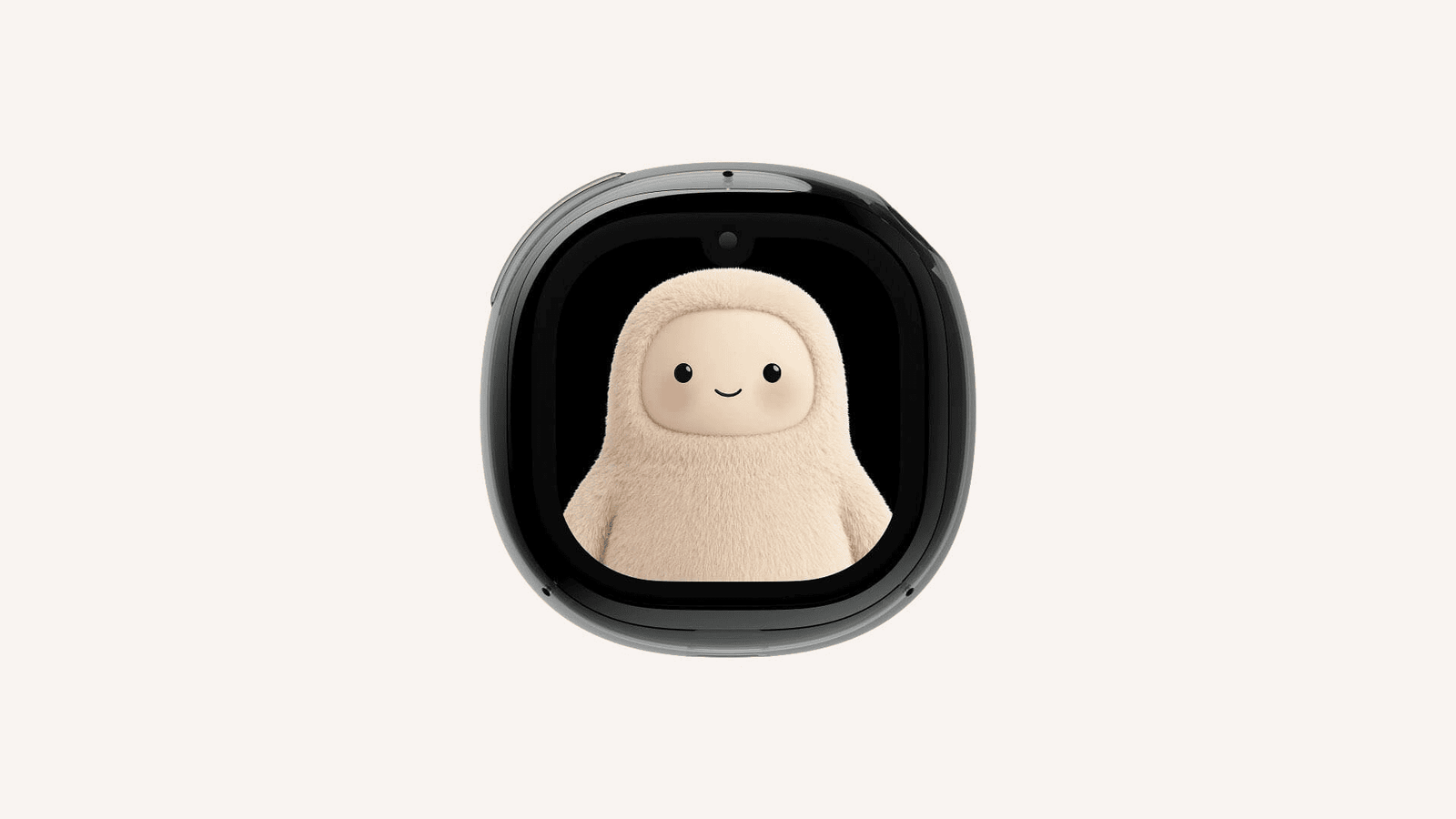
Humane raised more than $230 million to build a device that would replace your phone. In February 2025 it sold most of its assets to HP for $116 million, and every AI Pin stopped working on 28 February. Less than two years later, Meta is about to ship a keychain-sized gadget for its Muse AI agent, and it has to answer the question Humane could not: why would anyone carry a second device?
Meta says the Muse Charm ships in December. It has not confirmed a price. This is a look at what the first wave of AI gadgets got wrong, what is different about the second wave, and what could still sink it.
The gadgets that promised to replace your phone
Humane launched the AI Pin in April 2024 at $699 and pitched it as a smartphone replacement. The founders, Bethany Bongiorno and Imran Chaudhri, were ex-Apple. The reviews were brutal. At one point that summer, returns outpaced sales, according to TechCrunch, which also reported that Humane told customers to stop using the charging case over battery fire concerns. In October the company cut the price by $200 to $499.
The numbers behind that collapse are small. Tom’s Guide, summarising internal sales data first reported by The Verge, said about 10,000 AI Pins and accessories had shipped by August 2024, against a New York Times report that Humane hoped to sell closer to 100,000. More than $1 million of product had been returned. Humane disputed the accuracy of the data but did not say where it was wrong.
Humane had also tried to sell itself in May 2024 for between $750 million and $1 billion, per a Bloomberg report. HP paid $116 million for the engineers and the CosmOS software, not the device. Owners got refunds only if they had bought within the previous 90 days. Everyone else was told to back up their data before the servers went dark.
Between May and August 2024, more Humane AI Pins were returned than purchased.
The Rabbit R1 was the other poster child. By September 2024, founder Jesse Lyu told Fast Company that only about 5,000 people used the R1 daily, and his team had pushed 16 over-the-air updates since launch, as 9to5Mac reported. Marques Brownlee had already called it barely reviewable. Lyu’s defence was that startups should ship early and accept imperfection.
Why the first wave failed
They tried to replace the phone, not sit beside it
9to5Mac’s Ben Lovejoy made the sharpest argument at the time: dedicated AI hardware is like trying to invent the iPod after the iPhone. If a gadget does what a phone app could do, the gadget loses, because the phone is already in your pocket. Humane and Rabbit both asked buyers to change a habit and pay hundreds of dollars for the privilege.
The demos ran ahead of the software
Tom’s Guide reported, citing an unnamed source in The Verge’s story, that early testers said the AI Pin failed to match its demo videos, and that it launched anyway. Rabbit’s 16 updates in a few months tell the same story from the other side: the product was finished in public. A gadget has one chance to make a first impression, and reviewers do not grade on potential.
The hardware was not ready
Battery safety, heat and slow responses are not software problems. Humane’s charging case warning was a hardware failure on a product that already struggled to earn trust. Tom’s Guide also reported that Humane could not reassign returned pins to new users, a limitation it blamed on T-Mobile, so unsold stock simply sat.
There was no audience before the device
This is our reading of the numbers, not a reported fact. Both companies had to build an assistant people trusted and a device people wanted at the same time, with no installed base of users to start from. A $699 box is a hard first purchase from a company nobody has used.
The device died with the company
When Humane stopped paying for its servers, the AI Pin lost calling, messaging, AI answers and cloud access. A cloud-dependent gadget from a standalone startup is only as alive as the startup. Buyers noticed, and the next buyer will remember.
Why Muse Charm is a different bet
Meta did the order of operations the other way round. It launched the Muse app on 8 September 2026 and built the habit first. According to Sensor Tower data in TechCrunch, Muse reached 10.2 million US downloads in its first 40 days, and its 7-day retention was 30% against an average of 19% for rival AI apps. Daily active users hit 2.5 million on 16 October. Meta also put 39% of its October ad spend behind the app and can promote it across services with 3.6 billion daily users.
That changes what the Charm is. Meta’s own page calls it the first device made for Muse, according to FourWeekMBA’s read of the waitlist page. It is a shortcut into something people already use, not a bet that a new category exists. Meta unveiled it at Connect on 23 September 2026. Reports describe a small screen showing a Muse avatar and a fingerprint tap to wake it, and Meta says you can talk to Muse by voice, touch and camera.
Meta has also made sure Muse does not live or die with one gadget. It is on iPad, and as of 10 November on Apple Watch and Android Wear OS. If the Charm disappoints, Muse survives. That was never true for the AI Pin.
There is also proof that people will wear Meta’s AI hardware when it looks like something they already want. UploadVR reported that Ray-Ban Meta glasses sold about 2 million units between October 2023 and February 2025, then EssilorLuxottica said it sold more than 7 million Ray-Ban and Oakley smart glasses in 2025 alone. Glasses succeed because they are glasses first.
Then there is price. Unite.AI, citing a report from The Information, said Meta plans to charge $300 and bundle 12 months of free Verizon 5G service. Meta has not confirmed that. If it holds, the Charm costs less than half of what the AI Pin cost at launch, and it arrives with connectivity sorted. The same report said Meta pushed back its smartwatch to 2027 to make room for the Charm, which suggests the company is serious.
Where it can still go wrong
Nothing here is proven. The Charm has not shipped, and Meta’s page showed no price or ship date when FourWeekMBA read it in mid-November. Meta’s 5 November announcement, as relayed by Unite.AI, said voice conversations are still coming soon to the Charm and to its AI glasses. A voice-first device that launches without good voice would repeat the exact mistake Humane made.
The iPod-after-iPhone question also remains. Reports say the Charm is set up and synced through the Muse app on an iPhone or Android phone. It is an accessory to your phone, which is smarter than replacing it, but accessories have to earn their pocket space every morning.
Finally, ask who the agent works for. Per Ars Technica’s report of Connect, Mark Zuckerberg said Muse will have a free tier and Meta expects to profit over time from a small fee on transactions. An agent that books, buys and reorders for you sits next to a business model that earns when you transact. That is not a reason to avoid it. It is a reason to read the settings.
The wave behind Meta
Meta is not alone, and the pattern is consistent. Bloomberg reported in February, via Notebookcheck, that Apple is working on an AirTag-sized pendant with low-resolution cameras that leans on the iPhone for the AI processing, camera-equipped AirPods, and smart glasses that were set for mass production in December 2026. In January, OpenAI’s chief global affairs officer Chris Lehane said the company was on track to unveil its first device in the second half of 2026, as MacRumors relayed, without promising it would go on sale this year. OpenAI bought Jony Ive’s io for $6.5 billion to get there.
The pattern is our takeaway, not theirs. The first wave was startups building a new kind of computer. The second wave is platforms building accessories to computers you already own. That is a smaller promise, and smaller promises are easier to keep.
Three tests the Charm has to pass
First, it has to do one thing your phone does badly, probably speed: a tap and a question without unlocking anything. Second, it has to work on day one, including voice, which Meta has said is still coming. Third, it has to survive its maker, and unlike Humane, Meta is not going anywhere. If the Charm clears the first two, the failures of 2024 will look less like a verdict on AI hardware and more like a rehearsal for it. We will know within a quarter.
Questions readers ask
What was the Humane AI Pin?
The Humane AI Pin was a screenless wearable that launched in April 2024 at $699 and promised to replace the smartphone. Reviews were harsh, returns outpaced sales for a stretch in 2024, and Humane sold most of its assets to HP for $116 million in February 2025. The pin stopped working on 28 February 2025.
What is Meta Muse Charm?
Muse Charm is a keychain-sized Meta device built to talk to the Muse AI agent without a phone in your hand. Meta showed it at Connect on 23 September 2026 and says it ships in December. Meta has not confirmed a price, though The Information reported $300 with a year of Verizon 5G.
Why did early AI gadgets fail?
Early AI gadgets failed because they promised to replace the phone but delivered slower, less reliable versions of what the phone already does. Demos outran shipped software, hardware had safety and battery problems, and buyers had no reason to carry a second device. Rabbit said only about 5,000 people used its R1 daily in September 2024.
Can Muse Charm succeed where they failed?
It has a better chance, but nothing is proven yet. Muse reached 10.2 million US downloads in 40 days, so the Charm arrives with an audience instead of a pitch deck. Voice on the Charm is still listed as coming soon, so the first reviews will decide whether the device works.
Sources
- TechCrunch: Humane’s AI Pin is dead, as HP buys startup’s assets for $116M
- Tom’s Guide: Humane flooded with $1 million in AI Pin returns
- 9to5Mac: Rabbit R1 has just 5,000 active users
- TechCrunch: Meta’s Muse hits 10M US downloads in 40 days
- TechCrunch: Meta’s AI agent Muse lands on Apple Watch and Android Wear OS
- FourWeekMBA: Meta opens Muse Charm waitlist, 54 days after its reveal
- Unite.AI: Meta’s Muse Charm price and free Verizon 5G plan detailed in report
- UploadVR: Meta and EssilorLuxottica sold 7 million smart glasses in 2025
- Notebookcheck: Apple AI wearables push
- MacRumors: OpenAI on track to unveil first AI device this year
Leave a Reply