

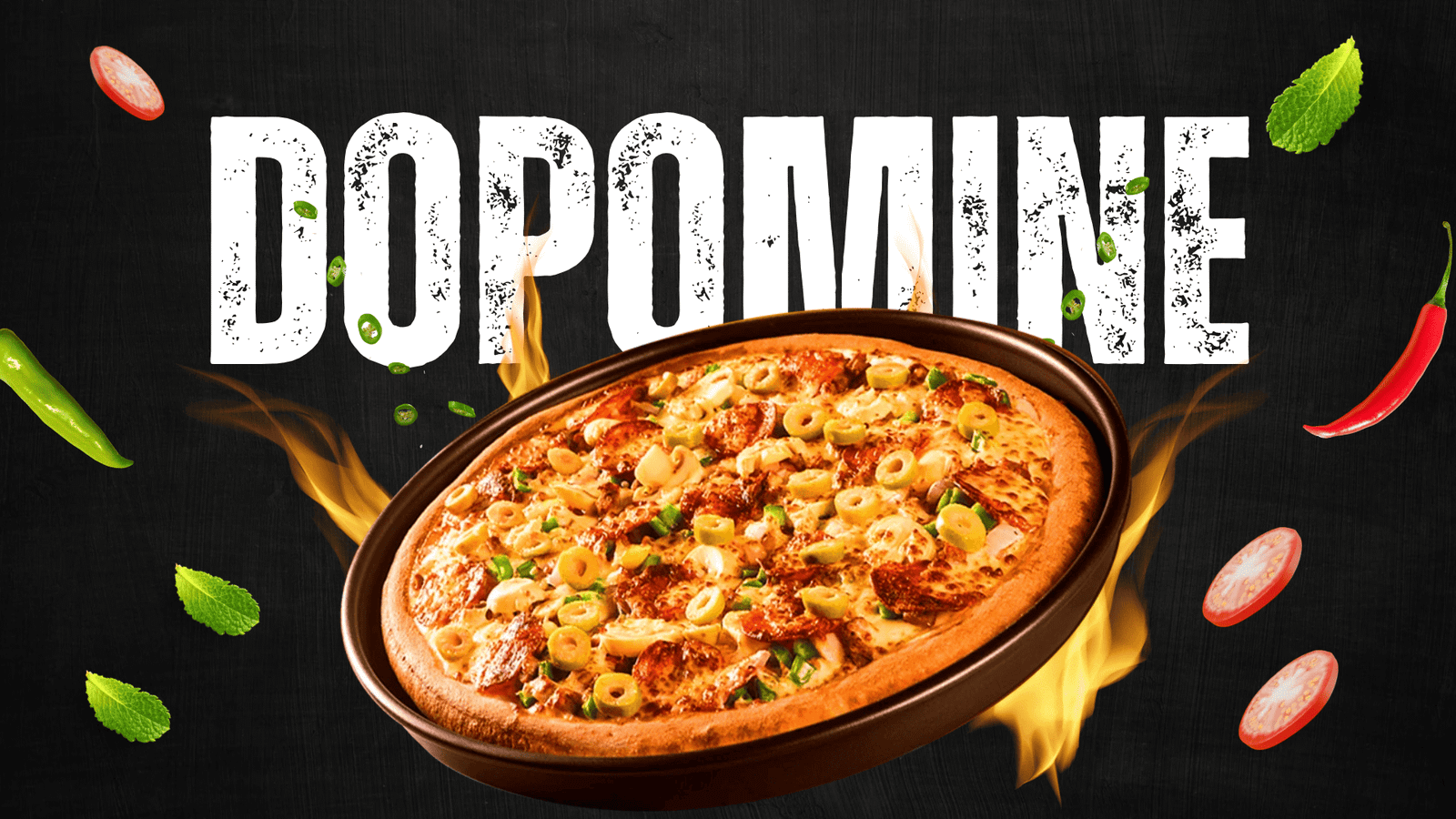
FoodNeverComes lets you order chicken tikka masala, check out and watch a rider cross a map to your door. Then nothing arrives. That’s the whole point. Since launching in June, the site has drawn more than 2.7 million visitors, according to the BBC. Even more surprisingly, two 26-year-old developers from Udaipur built it.
It belongs to a fast-growing genre called dopamine sites. These websites copy every step of online shopping except the part where you pay. You browse, fill a cart, check out and track a delivery. However, the order never comes.
What is a dopamine site?
A dopamine site simulates a purchase from start to finish. No money changes hands, and nothing ships. Most are free. Some copy food delivery apps, while others copy fashion stores, luxury boutiques and even holiday bookings.
- FoodNeverComes: fake food delivery with 22 kitchens, 327 dishes and a rider you can track on a map.
- Dopamine Shop: a fake store with more than 17,000 products across 37 categories. Its slogan is “Shop freely. Buy nothing.”
- FakeHaul: a store that imitates Temu, built by a Microsoft engineer.
- TripNeverLeaves: plan a holiday, then board a flight that never leaves the runway. It comes from the FoodNeverComes team and has passed 100,000 visitors.
It started as a joke in Seoul
In March, Seohyun Park, a 21-year-old mechanical engineering student in Seoul, built a fake food-delivery site. Its name roughly translates as Food Never Arrives. She meant it as a playful experiment. In fact, the site even showed users how much money and how many calories they had saved.
Soon, however, people began sharing it and debating whether it actually stopped them ordering. Since then, the idea has spread to Brazil, India and the US. For example, one site, dopamineshopping.com, launched in June. It now runs in 14 languages and claims more than 32,000 orders “worth exactly nothing.”
Yes, you can “buy” a Birkin
The luxury aisles are where it gets absurd. Dopamine Shop’s “Vault” lists Rolex watches and a Hermès Birkin 30 at $12,500. Meanwhile, a Rest of World editor spent a week placing orders for a $44,860 Patek Philippe watch, a $9,800 Tiffany ring and a $7,350 Cartier bracelet. Naturally, none of it arrived.
For some users, it’s pure fantasy. For others, it’s a budget tool. In Seoul, a 25-year-old office worker told The Korea Times that he opens a fake delivery site when late-night cravings hit. As a result, he says, it feels as if he really ordered something, and he keeps his money.
Why fake shopping feels real
The trick is simple. The reward comes before the purchase, not after it.
University of Michigan neuroscientist Kent Berridge separates wanting from liking. Wanting is the drive to get something, while liking is the pleasure of having it. According to Berridge, dopamine tracks wanting more closely.
Similarly, Yale’s Ravi Dhar calls the pleasure of looking forward “anticipatory utility.” Neuroscientist Nicole Prause also told NerdWallet that dopamine runs highest during the hunt itself: searching, choosing and adding to the cart.
In other words, shopping apps already sell anticipation. Dopamine sites simply delete the bill.
Do dopamine sites help you spend less?
Maybe. But nobody has proved it yet.
On the plus side, a delay can kill an impulse. For instance, Texas Tech researcher Deirdre Popovich found that putting items on a wish list lowered people’s intent to buy them. A fake checkout could work the same way.
On the other hand, Stanford psychiatrist Anna Lembke compares the trend to “digital near beer.” She warns that repeating the ritual could strengthen the very habit it’s meant to replace. Media psychologist Pamela Rutledge goes further. She says there’s no solid evidence yet that spending less on these sites carries over into real life.
The catch: a ₹0 checkout still has a price
You pay with time, attention and, sometimes, data. Many dopamine sites are free and ad-supported. So after ordering fake tacos, you may start seeing ads for real ones. Experts also warn that some sites could collect real user data.
Therefore, never enter real card details. A fake store has no reason to ask for them. And before you trade an evening for a cart full of nothing, check how much time your phone already takes with our screen time calculator.
What dopamine sites tell founders
For anyone building consumer apps, dopamine sites are an awkward mirror. They show that much of e-commerce’s pull lives in the funnel itself: browsing, carts, countdowns and delivery maps.
In fact, digital consumption researcher Shriram Venkatraman points out that people already use real carts to gather information, plan purchases and simply pass time. Dopamine sites just turn that behaviour into the whole product.
That raises an uncomfortable question for every product team. If people enjoy your checkout even when nothing arrives, how much of your engagement is real demand?
Meanwhile, the FoodNeverComes founders, Purvansh Parmar and Anshul Sharma, say they didn’t build it to make money. Instead, they plan to keep it free and eventually share its data with neuroscientists and psychologists.
How to use a dopamine site without getting hooked
- Use it as a pause, not a habit. When a craving hits, place the fake order first, then decide later.
- Count only real savings. Track what you skipped, but only purchases you would actually have made.
- Keep your card out of it. No dopamine site needs your real payment details.
- Watch for the reverse effect. If fake carts make you want real ones, stop using them.
- Find a longer-lasting lift. A walk, your favourite song or a call with a friend can also boost your mood.
Also, notice who is driving the shift. Younger users are already posting less and scrolling more, as we found in Why Are Millennials Posting Less on Social Media? Dopamine sites push the same idea one step further: all of the browsing, none of the buying.
Dopamine sites FAQ
What are dopamine sites?
Dopamine sites are websites that simulate online shopping or food delivery. You browse, add items to a cart, check out and track a delivery. However, you never pay, and nothing arrives.
Where did dopamine sites start?
They started in South Korea. In March 2026, Seoul student Seohyun Park built a fake food-delivery site as a playful experiment. Since then, similar sites have appeared in Brazil, India and the US.
Are dopamine sites safe?
Most don’t ask for payment, so the direct risk is low. Still, many are ad-supported and may collect data. So never enter real card details on a fake shopping site.
Do dopamine sites help you save money?
They might help some people pause an impulse. However, experts say there’s no solid evidence yet that spending less on these sites leads to spending less in real life.
Who made FoodNeverComes?
Two 26-year-old software developers from Udaipur, Purvansh Parmar and Anshul Sharma, built FoodNeverComes. According to the BBC, it drew more than 2.7 million visitors after launching in June.
Sources
- Business Today, citing the BBC, Two Udaipur developers’ site draws millions (September 2026)
- The New York Times, via West Hawaii Today, Dopamine sites sell nothing, and people cannot get enough (September 2026)
- NerdWallet, Can Pretend Shopping Help You Spend Less? (September 2026)
- Rest of World, The online shopping trend where you buy nothing (August 2026)
- The Conversation, Why people are ordering fake food and fashion deliveries on free ‘dopamine apps’



Leave a Reply