

US startups raised $412.7 billion in the first half of 2026, up 30% on the year. In the same six months, the shutdown firm SimpleClosure handled more dissolutions than a year earlier, and Andreessen Horowitz data shows more venture-backed startup shutdowns this year than in any year on record. Your feed shows nine-figure rounds. Your peers are quietly filing dissolution papers. Both are true because the money and the closures sit in different cohorts.
Where the money went
AI companies took $355.9 billion of the $412.7 billion, roughly 86 cents of every dollar, according to SimpleClosure’s H1 2026 shutdown report. Megadeals of $100 million or more captured 87.5% of the total. That left 12.5% to cover every seed, Series A and Series B deal in the country combined.
The report makes the contrast sharper: one $65 billion Anthropic round that quarter was larger than all the early-stage money raised across the US. A headline total this big says very little about whether your own round will close.
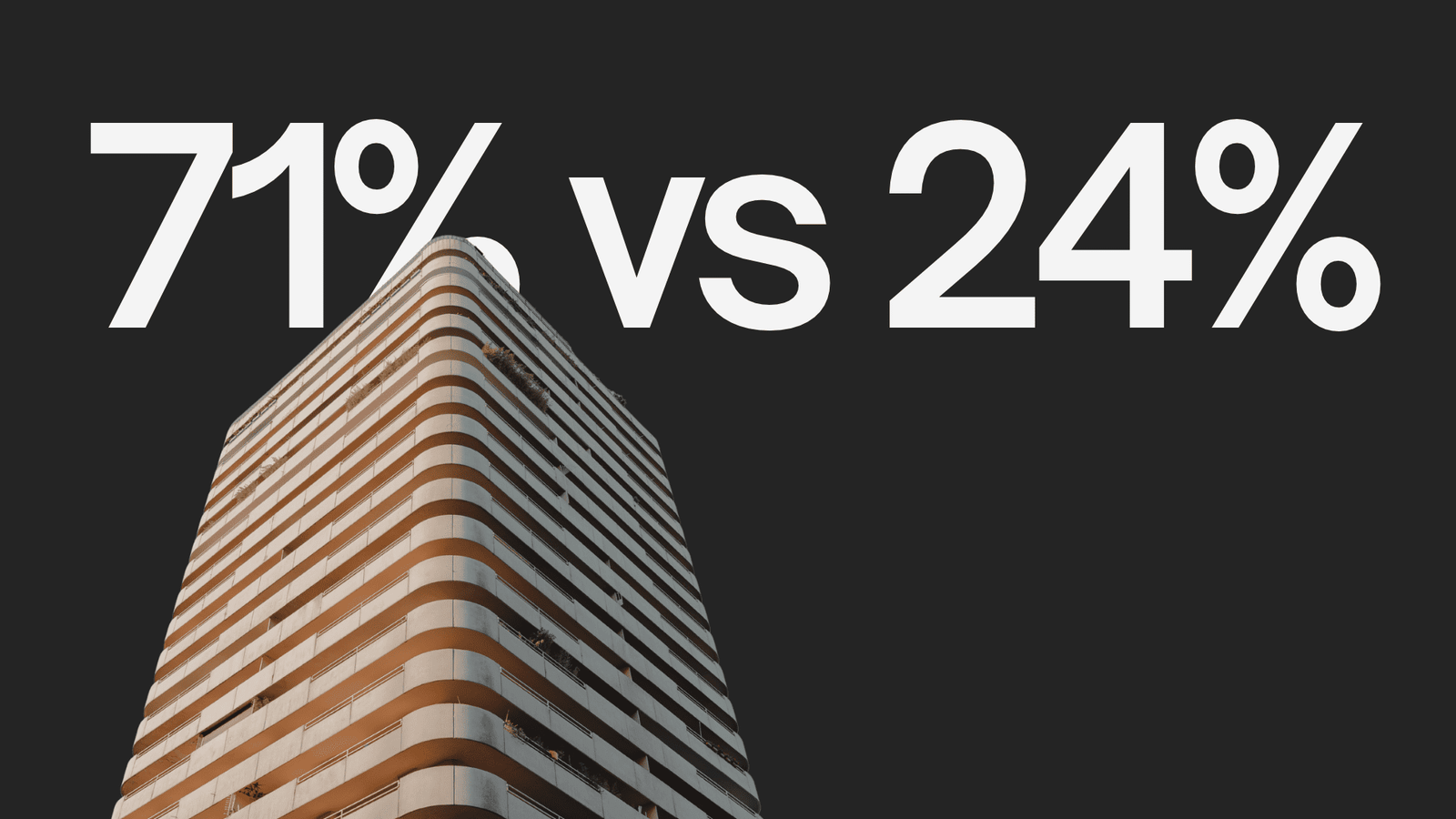
The early stages show it. Of companies that raised a seed round of $1 million or more in 2023, only 24% have made it past seed, per the same report. For seed rounds through 2020, the historical rate was 55% or higher.
Who is closing: the 2019 to 2021 class, and old software
The Andreessen Horowitz data, as summarised by the law firm Foley & Lardner, shows the largest share of closures coming from companies founded between 2019 and 2021, when interest rates were near zero and capital was easy. Foley also cites Startup Genome research finding that roughly three in four failed startups had scaled too early, hiring and spending ahead of results.
SimpleClosure’s data adds the sector. B2B SaaS made up 27.3% of the companies it closed in H1 2026, nearly double the 14.4% share for AI companies. The median SaaS company it closed was incorporated in 2022 and shut at 3.78 years old. More than half of those SaaS closures predate 2023, against one in five of the AI closures.
The AI share is falling: 17.7% two years ago, 15.9% in the firm’s December 2025 report, 14.4% now. SimpleClosure’s reading is that the closing software companies were built before AI arrived and have struggled to raise since. Its CEO says non-AI-first companies are finding fundraising hard, and that shutting down and restarting can sometimes be easier.
Two cautions. The AI cohort is young: its median incorporation year was 2024, and its median age at closure was 2.30 years. SimpleClosure says the next 24 to 36 months will show whether the AI share starts climbing. And Foley’s Louis Lehot reads the same record as a market clearing out one cycle’s excess, pointing to SVB data showing the median age at which a company hits a $1 billion valuation has fallen to just over four years, down 37% since 2023.
Most close with a little cash left, and a lot of them choose to
The median AI company in SimpleClosure’s data stopped with $30,000 in the bank, more than double the $13,000 median for non-AI companies. About 91% of the AI companies still had a cash balance, so they were stopping before the money ran out. One likely reason is the exit route: PitchBook counted 322 acquihires in AI and machine learning in 2025, up from 181 in 2024, and a founder holding cash can take a team-only offer instead of spending down the last reserves.
Among companies that gave a reason, 28.1% cited insufficient capital or cash flow. Another 22.2% cited a personal decision or change in priorities, and 5.4% cited founder conflict or burnout. Together, founder choice reaches 27.6%, about as common as running out of money.
The pace is slow, not sudden. The median time from last raise to closure was 2.28 years in both H1 2025 and H1 2026. These companies did not hit a wall; they went two years without a next round.
One caveat before you quote any of this. SimpleClosure sells shutdown services, and its sample is the companies that hired it. That skews toward founders who planned the ending rather than abandoned the company, so treat it as a clear view of one slice of the market, not a census.
How to work out your own runway
The lesson in the data is about timing. A founder who closes while solvent can pay creditors, file final returns and return what is left to investors. A founder who waits until the account is empty has no money to do any of that properly.
Here is a simple way to make the decision early. The numbers below are an illustration, not a benchmark.
- Pull three numbers. Cash on hand (₹90 lakh), average monthly net burn (₹6 lakh) and any commitments due in the next 12 months.
- Set aside a wind-down reserve first. Some advisors suggest one to two months of operating costs. Take two months of burn: ₹12 lakh.
- Divide what is left. (₹90 lakh − ₹12 lakh) ÷ ₹6 lakh = 13 months. The naive figure, ₹90 lakh ÷ ₹6 lakh, says 15. The honest runway is 2 months shorter.
- Put a date on the calendar, not a trigger. A raise can take several months, so choose the month you will decide whether to raise, cut or close. In this example, month 7 leaves six months of cushion. A vague threshold tends to slide while everyone stays busy.
- Share the number. Show your co-founder and board the same calculation on the same schedule, so one person is not carrying it alone.
Runway also grows from the other side of the ledger. Our look at Elon Musk’s “idiot index” shows how to spot a cost sitting far above what it should be, and the weekly status meeting cost breakdown shows how a routine meeting quietly eats into burn.
Frequently asked questions
Are more startups shutting down in 2026?
Yes, by the measures available. Andreessen Horowitz data, cited by Foley & Lardner, shows more venture-backed shutdowns this year than in any year on record, and SimpleClosure handled more dissolutions in H1 2026 than a year earlier. Neither source is a full census of every startup.
Are AI startups failing less than SaaS startups?
So far, in share terms, yes. AI companies were 14.4% of SimpleClosure’s H1 2026 closures, against 27.3% for B2B SaaS. But the AI cohort is young, with a median incorporation year of 2024, so the firm says the next 24 to 36 months will show whether that holds.
How much cash do startups have left when they close?
Usually very little. In SimpleClosure’s H1 2026 data, the median AI company closed with $30,000 and the median non-AI company with $13,000. Closing properly takes money for filings and final payroll, so waiting until the account is empty removes the option of an orderly close.
How big should a wind-down reserve be?
There is no standard, but some advisors suggest one to two months of operating costs. Subtract it from your cash before dividing by monthly burn, so the runway you quote already assumes you might need to close. The point is to turn a forced closure into a chosen one.
Sources
- SimpleClosure, “The H1 2026 Shutdown Report”, August 20, 2026: SaaS and AI shares, cash at closure, reasons for closing, megadeal share, seed survival rate, acquihire counts.
- Foley & Lardner, “Record Startup Shutdowns and a Market That Is Moving Forward”, September 25, 2026: Andreessen Horowitz shutdown data by founding year, Startup Genome finding, SVB data.
- Under30CEO, “Why Startups Fail: Record Funding, Record Shutdowns”, September 4, 2026: 30% rise in H1 2026 venture investment, wind-down reserve suggestion.


Leave a Reply